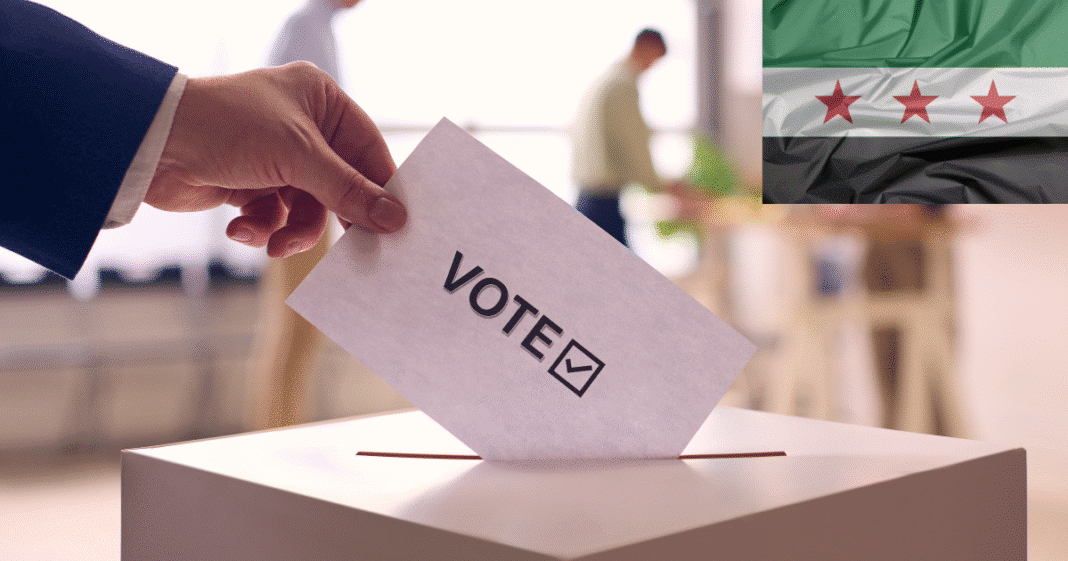

Syria’s journey to democracy faces a major obstacle with the Syria election delay 2025. As the Islamist government under Ahmed al-Sharaa attempts electoral reform, violence and divided governance obstruct polling in Sweida, Hasaka, and Raqqa. This article unpacks the implications for Syrian reconstruction, regional autonomy, and national political legitimacy.
National Silence Amid Syria Parliamentary Election
As Syria gears up to stage its first parliamentary election under President Ahmed al-Sharaa’s new leadership, in three provinces there will be silence on national voting day. These quiet zones are not chosen out of apathy or indifference, but out of the escalating tension and the frozen hostilities rending the nation’s fragile reboot. For Sweida, Hasaka, and Raqqa, the ballot box remains a distant steel box despite its desperate call for change.
Official Confirmation of Syria Election Delay 2025
The Higher Committee for People’s Assembly Elections has verified that the parliamentary elections planned for September 15-20, 2025, will not be held in Sweida, Hasaka, or Raqqa because of current security issues. The verdict, delivered on August 23, 2025, highlights the enduring obstacles to post-conflict reconstruction and political transition in Syria.
Why Are Sweida Elections Postponed Again?
Security is the main concern of the Syria election delay 2025. Syria’s state-run SANA news agency said elections in the three provinces would be delayed until a “safe environment” was created. In Sweida, meanwhile, mounting violence between Druze militias and Sunni Bedouin fighters some operating alongside pro-government members has made the southern province another theater of new clashes. This sectarian violence has been simmering for months and peaked in July in a series of violent confrontations that reportedly killed hundreds. The sessions of poll organising and logistics have thus become risky and unwelcome due to these confrontations which have their source in the territorial struggle or control of resources.
Kurdish Areas Voting Delay Fueled by Autonomy Standoff
With that said, parts of the Raqqa area and Hasaka province are still controlled by the U.S.-backed Syrian Democratic Forces (SDF), which are majority Kurdish. The Kurdish authorities, in effect, run their own parallel structures, making relations with the central government in Damascus difficult. The precarious balance of forces in Syria, and the confrontation between the Islamist government and the Kurds, makes it impossible to hold elections in these territories at the moment. Democratic processes can only be held in places where the government has full control, the commission’s spokesman has said.
Who is Ahmed al-Sharaa and What is His Significance in Syria?
President Ahmed al-Sharaa, who led an Islamist-dominated rebel alliance to topple Bashar al-Assad in December, ruled today as Syria’s new leader. After the change of regime, Syria is now passing through a difficult political transition. Al-Sharaa disbanded the existing parliament last January and in March 2025 introduced a transitional constitution with a five-year transition phase. Under the terms of this constitution, the president was to appoint two-thirds of the 210-member parliament, while the rest was to be elected nationally through local bodies set up for that purpose.
Criticism of the Islamist Government of Syria
Despite the fact that al-Sharaa has shown himself to be mindful of trends toward stability in Syria and economic recovery, accusations spun around his leadership are aplenty. Critics say the interim constitution concentrates too much power in the presidency and does not provide sufficiently for ethnic and religious representation, raising fears among Syria’s many minority communities.
How Does the SDF Affect Syrian Parliament Elections?
Part of the issue with the voting is the existence and power of the Syrian Democratic Forces especially in the Hasaka and part of Rhakka which are a major impediment to the inevitable re-independence of all of the Syrian occupied areas. Despite a March agreement that launched a process to unify Kurdish institutions with the central government in Baghdad, nothing has been implemented. In these areas, the SDF has military and civilian control, functioning largely independent from Damascus. That autonomy, which guaranteed some stability for residents in these regions, weakens the capacity of the central government to organize national electoral exercises.
Parliamentary Paralysis: Sweida and Kurdish Areas Missing from Vote
The postponement of the Kurdish areas’ vote is an extension of a larger standoff between the SDF’s ambition to obtain autonomy and the Islamist-run government’s wish to establish a centralized, united Syria. For the time being, the booths will sit empty and the seats in these areas of parliament will be unfilled.
Also Read, Gaza Famine Declared: 33 Killed Amid Israeli Strikes
The Delayed Elections and Their Political Importance
These elections represent the first electoral transition of Syria’s parliament under its new Islamist government. This event is a trial of legitimacy for Ahmed al‑Sharaa and his ilk — a standard bearer of progress. But the inability to involve the entire geographic expanse of Syria in this democratic process looms large over it. [Read from The Times: Iran vows revenge as it abandons atom limits] The postponed vote was a sobering reminder that regime change notwithstanding, the path to national coherence and functioning democracy in Iran is strewn with challenges.
Sweida Remains a Hotspot of Tribal and Communal Tensions
Sweida polls delay Following the postponement of the Sweida vote crime and revenge in the bruising contaminated past draw our attention to the fact that the domestic tribal and sectarian cracks remains unsettled. These conflicts run so deep into Syria’s political terrain, and they remind all actors that reconciliation isn’t just political but cultural and communal.
Implications for Reconstruction and Governance in Syria
The postponing of such election does not only concern the unity of the nation but also the pace of Syria’s post-war rebuilding. While al-Shara’a has appealed for investment from international investors and political actors in order to back post-war reconstruction, the fact that there continue to be areas of the country where government authority is mostly theoretical undermines the possibility of such partnerships. Investors and governments are wary when large swathes of a country are effectively dislocated from the dynamics of public governance.
Concerns Over Democratic Integrity in the Islamist Government in Syria
And Ahmed al-Sharaa’s consolidation of electoral appointments has invited wary monitoring from international watchdogs and domestic critics alike, wary of any long-term democratic deficits. While Syria is bent on appearing to move in the direction of democratic norms, the means and timetable of such a transition remain unequal and debatable.
Local Reactions and Prospects in Sweida and Kurdish Regions
In Sweida itself, ethnic Druze show mixed responses. On the one hand, some militia groups demand greater autonomy, while on the other, groups insist on national unity. The community’s identity is being challenged in a broader national context, and this is feeding internal divisions that parallel the larger national breakdown.
Mistrust and Uncertainty Among Syrian Kurdish Populations
In Kurdish areas, skepticism prevails. Communities living under SDF control remain wary of Damascus’s overtures, worrying that they may lose their autonomy and face cultural effacement by a centralized state that, for now at least, bears no resemblance to the pluralist dream that has become a reality in northeastern Syria.
Looking Forward: When Will the Elections Be Held?
Looking further ahead, the Syrian government has offered no time-frame for when the postponed elections might be held in the three provinces. Future access to the vote in these areas depends on successful negotiations and better security a lot to ask in a country still trying to shake off more than a decade of civil war.
Conclusion: Syria at the Crossroads
More than an administrative setback, however, the Syria election delay 2025 in Sweida, Hasaka, and Raqqa represents an outside political intervention on the future of the country. It’s just another face of Syria’s continuing nightmare to rebuild itself from conflict and evolve into a credible international entity. Even as a new Islamist government aspires to consolidate its power and refashion the nation, the fractures that drive exclusion and violence are deeply entrenched. For Syrians in these areas, the lack of ballots is more than just a void or a lack of democracy it’s an indication that peace and unity will have to wait.
FAQs about Syria Election Delay 2025
Why were elections postponed in Sweida, Hasaka, and Raqqa in 2025?
The elections were postponed mainly due to security concerns, ongoing sectarian violence, and areas beyond government control. The Kurdish areas are under the Syrian Democratic Forces, undermining central election logistics. Sweida faces violence between Druze and Sunni militias.
How does the Syrian Democratic Forces’ influence affect voting?
The SDF holds autonomous military and governmental authority in parts of Hasaka and Raqqa. This disconnect undermines the centralized government's ability to hold national elections, contributing to the Kurdish areas voting delay in Syria’s 2025 parliamentary process.
What is the political significance of Ahmed al-Sharaa’s leadership?
Ahmed al-Sharaa’s Islamist government replaced Bashar al-Assad's rule, offering a transitional constitutional structure. However, his appointment powers and concentrated executive authority stir concerns regarding the democratic legitimacy and inclusiveness of Syria’s post-conflict governance model.
What are the broader implications of Syria’s election delay on its reconstruction?
The Syria election delay 2025 signals political fragmentation and instability, deterring international investors and delaying democratic normalization. Lack of voting in major regions reflects the Syrian civil war aftermath and complicates long-term peacebuilding and national unity.
Reference
Syria Delays 2025 Elections in Sweida, Hasaka & Raqqa