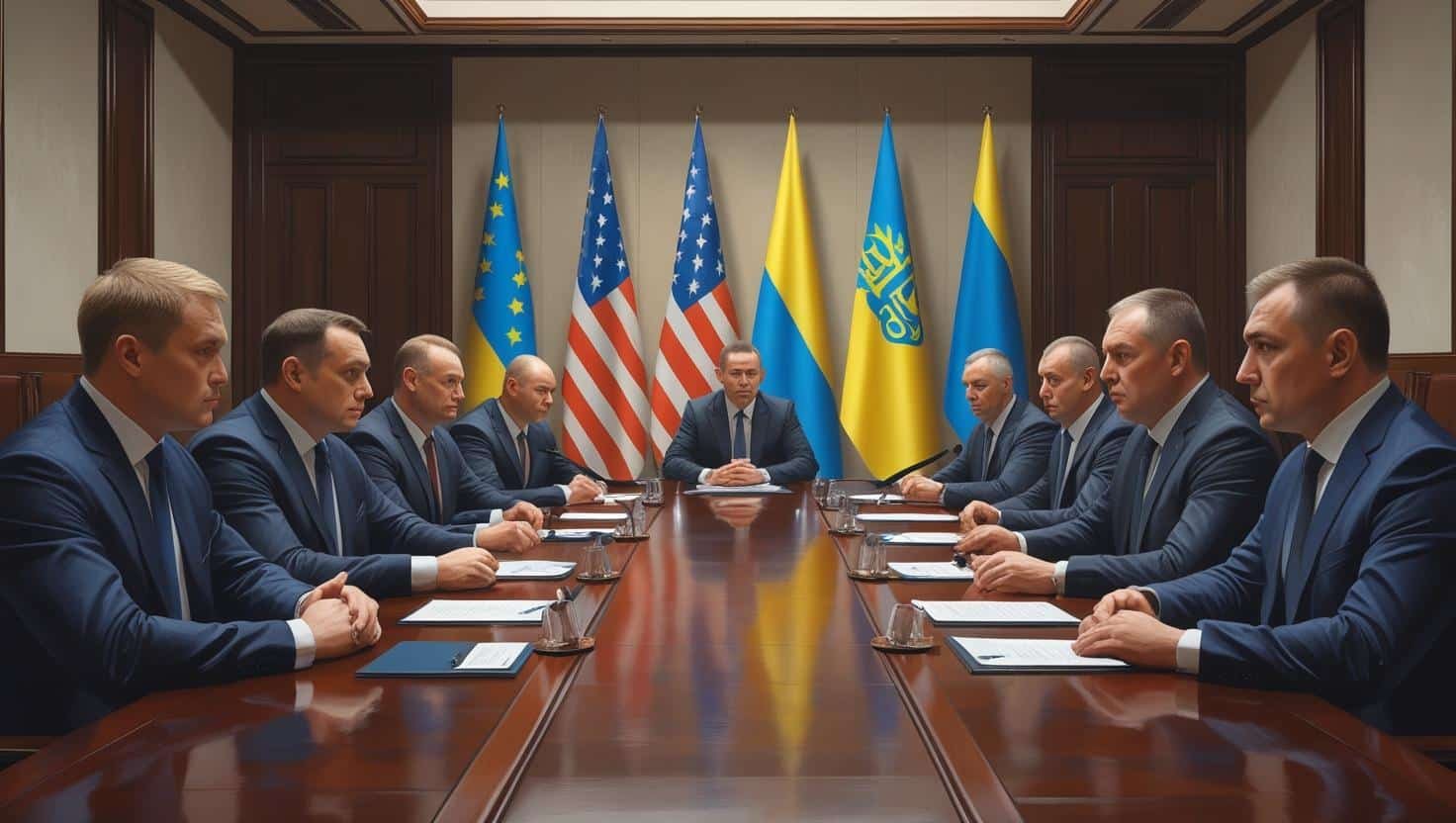

Tensions rise in the South Caucasus as Iran rejects the transit corridor outlined in the Armenia Azerbaijan peace deal. The U.S.-backed Trump TRIPP corridor, meant to foster regional connectivity, has instead sparked new geopolitical divides. This article explores Iran’s stance, foreign policy, and strategic fears surrounding the Trump Route for International Peace and Prosperity.
Iran Rejects Transit Corridor in Armenia Azerbaijan Peace Deal
Just as world powers are congratulating each other on a new peace accomplishment between Armenia and Azerbaijan, one regional behemoth is saying it has no intention to sit by silently. Iran Forcefully against Armenia-Azerbaijan Peace Deal After Signing, It Specifically Opposes U.S.-Backed Transit Route This new corridor is termed the Trump Route for International Peace and Prosperity (TRIPP), and it signals a new direction for connectivity in the South Caucasus. However, for Iran the project goes beyond the risk – it is a red line.
U.S. Mediation and Peace Agreement in the Caucasus
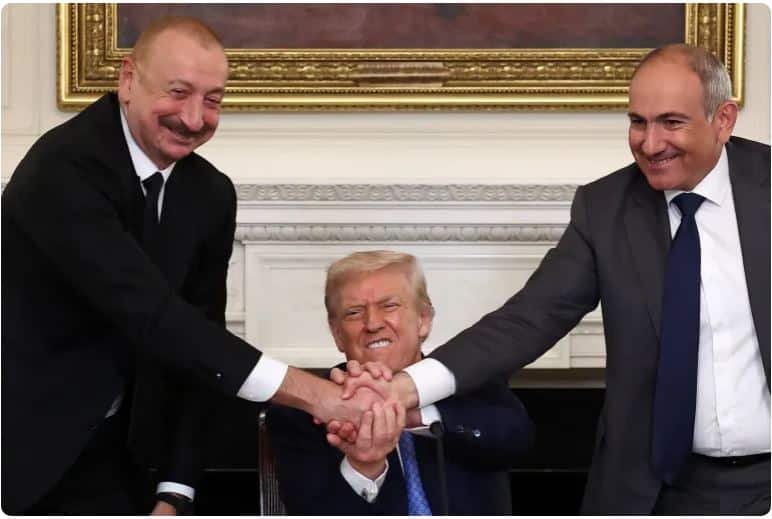
Hours after hosting Azerbaijani President Ilham Aliyev and Armenian Prime Minister Nikol Pashinyan at the White House on August 8, 2025, U.S. President Donald Trump declared a ceasefire in the decades-old conflict over Nagorno-Karabakh to be an “easy deal.” The meeting ended with a peace treaty which is supposed to resolve decades of hostilities over the land disputes aspects and ethnic inter-ethnic misunderstandings basis of Nagorno-Karabakh. The centerpiece of the deal is an international transit corridor running through southern Armenia that would link mainland Azerbaijan to the Nakhchivan exclave outside of Armenia and near Iran’s northern frontiers connected to the rest of Azerbaijan.
What Is the Trump Route for International Peace and Prosperity (TRIPP)?
The corridor, known as the Trump Route for International Peace and Prosperity, or TRIPP, is marketed not merely as a transport corridor but a geopolitically strategic corridor. Under the deal, only the U.S. can develop the route which will run under the flag of Armenia. Although Armenia and Azerbaijan presented the deal as a new beginning of cooperation for the region, the Iranian leadership regard the move as serious danger on Tehran national interests and regional security.
Iran Rebelled Against the Transit Corridor in the Armenia-Azerbaijan Agreement
For Iran, a myriad of security and sovereignty concerns, in addition to a long legacy of assistance with Azerbaijan, explain its rejection of the corridor. Iranian officials, for their part, view the TRIPP program as a geopolitical wedge aimed at driving a wedge in the Iran-Russia-China axis. Istanbul and Moscow have traditionally backed Armenia in its military and diplomatic confrontations with Azerbaijan.
Iran’s Sovereignty Concerns Over the Corridor
Iran has claimed that a corridor managed by foreign forces near its border establishes a troubling precedent for foreign investments in the region. Concerns over external efforts to influence geopolitical infrastructure directly adjacent to Iranian national territory have been officially conveyed by the Iranian Foreign Ministry. It reiterated the importance of national sovereignty and regional ownership in any such projects.
Implications for Armenian Sovereignty and Border Stability
In addition, the Iranian officials say that the peace corridor would be detrimental to the territorial integrity of Armenia. The land, they argue, a part of fully sovereign Armenian territory with terms forced or politically coerced in a context where Azerbaijan, after signing a ceasefire agreement in 2020, threatened to launch new military operations were transferred to Azerbaijan. If anything, any shrinkage in Armenian sovereignty could mean that will a disturbance in the delicate equilibrium of forces near its borders, raising concerns for Tehran.
Strategic Positioning of the Trump TRIPP Corridor in the Caucasus
The plan signed in Washington features the Trump Route for International Peace and Prosperity (TRIPP) as the heart of a potential transit highway between Armenia and Azerbaijan. The path will take from Azerbaijan into its Nakhchivan enclave by way of Armenia’s southern Syunik region. To this end, it aims towards economic integration, improvement of trade routes, and sustainable peace in the long term between these two historically rival countries.
U.S. Strategic Move Against Russia and Iran?
This version of the corridor is US-led and underpinned by a bilateral agreement, which is a departure from previous proposals that included Russia. This presents Washington with potential leverage in a region where Russian and Iranian influence has long been prevalent. American companies are going to develop and manage the TRIPP project, under the supervision of the Armenian authorities. The rationale for the pipeline is a mission statement of opening new energy and trade pathways connecting Asia and Europe through the Caucasus.
Perceived U.S. Expansionism vs. Iran Foreign Policy in the Caucasus
But critics say the very name reflects a desire by Washington to expand its geopolitical reach built around a framework of peace a framework that Iran has little confidence in.
Also Read, Trump Nuclear Submarines Deployment Amid Russia Tensions
The Impact of the TRIPP Corridor on the Relations with Iran and Russia
The impact of the TRIPP corridor is felt far beyond the limits of the Iranian-Armenian dispute. The corridor is not simply a physical vulnerability for Iran located so close to its northern territories, but a strategic challenge to its cooperation with Russia. On foreign policy, both Moscow and Tehran call for a multi-polar world as a counter to what they deem U.S. hegemony. So when Russia traditionally dominated the corridor that contains the U.S.-blessed corridor, it’s a black-and-white option: swim with the current or against it.
Russian Hesitations and Regional Balance
For its part, Russia welcomed the peace deal, but sounded a similar warning to Iran that non-regional actor’s presence would increase in the region. Officials in Moscow warned that Western-backed initiatives usually lead to the destabilization of regions rather than their stabilization. The Russian Ministry of Foreign Affairs said in an official communique that peace promoting initiatives should develop by “local and regional countries themselves” and should not be imposed externally.
Iran’s Intended Unilateral Action
Moreover, the suspension of the transit route is also an indication of relatively subtle frictions in the Iran-Russia-Armenia entente. Tehran has reiterated its intent of preventing any establishment of this infrastructure “with or without Russia,” indicating that it will act unilaterally as far as its frontiers and strategic interests are concerned.
The Caucasus Transit Conflict and Regional Tensions
Now that there is the rejection of the TRIPP corridor, the Caucasus transit conflict gets another dimension. The border established by antiquated Soviet thinking over decades, coupled with modern geopolitical calculations, and changing international partnerships continues to shape the region. The American-led initiative breaks apart previous alignments and marks a stronger role for the United States in a region where it has had less of a presence historically.
NATO in the Caucasus and Turkiye-Azerbaijan Alignment
The opening of the corridor has drawn praise from Turkiye, a NATO member and staunch supporter of Azerbaijan, which is looking forward to energy resources and goods passing through its territory to Europe. Instead, Turkish President Recep Tayyip Erdogan said during his periodic calls for cooperation as the road to regional peace, Iranian skeptics, at least, see little more than the darkling NATO shadow, one that even the state broadcaster has characterized as a “viper between Iran and Russia.
Diplomacy Versus Development in the Caucasus
This kind of language illustrates how heated the rhetoric, and how high the stakes are, surrounding the TRIPP route. Those built on politically sensitive ground with militarised borders, and subject to ebb and flow of regional political rumour and diplomatic realignment, have been no exception: each new infrastructure in the Caucasus has turned more diplomatic than developmental.
Iran Armenia Relations And Future Of South Caucasus
It begs the question how Iran could continue to have relations with Armenia, following the announcement this week of an open U.S.-backed corridor. Until the recent agreement with Azerbaijan, Iran was traditionally granting Armenia economic support having remained one of the scant nations carrying on with open exchange amid previous time frames of the blockade.
Will This Create a Rift in Iran-Armenia Ties?
The decision of Yerevan to allow the development of the corridor can bring Yerevan into conflict with her long-time ally in Tehran. While Armenian officials claim the project does honor national sovereignty, Iran gets the impression it is a shift towards Western interests a move that could realign regional allegiances.
Armenia’s Strategic Gamble Between Neighbors
Similarly, in Armenia, the leadership sees the TRIPP as an unavoidable compromise. Armenia’s security concerns may be hinging on U.S. guarantees while caught in two geopolitically stronger neighbors Azerbaijan with mighty Turkiye backing it, and Iran with historic ties to Armenia. The political price could be steep though, if Iranian-linked projects or coalitions start to peel away, despite hand-wave optimism.
The Road Ahead: Resistance or Reset by Region?
This means: if your interests do not respect my strategic interests, I will act directly you nothing more is visible in this statement of Iran. While Tehran has not specified what particular actions it would take to obstruct the corridor, it has unconfirmed reports have hinted that it could be hinging its interest in either stringent border control measures, infrastructural restrictions, or an appeal to global legal bodies such as the International Court of Justice.
Iran’s Tactical and Asymmetric Responses
Political analysts believe Tehran will also use its weight elsewhere in regional conflicts or economic partnerships to balance the diplomatic breakthrough in Washington. Previously, the Iranian leadership responded asymmetrically by way of commerce embargoes, diplomatic indignation, or military logistics advancements in close proximity to contentious regions.
Russia’s Future Role in the South Caucasus
Meanwhile, regional stakeholders are watching to see what kind of reaction Russia decides on. Should Moscow, beset by economic strife from Ukraine and the West, gradually retreat from the South Caucasus, Iran could be left alone to counter the onward march of TRIPP.
Conclusion
Iran’s dismissal of the Trump-backed transit corridor isn’t just about infrastructure it’s much larger than that. It is a statement of sovereignty outwardly facing a new regional alliance around which the light of influence in the post Soviet space gradually shifts. The TRIPP corridor soon could become a proving ground for American diplomacy and Iranian resistance, as Iran prepares for what it perceives to be an imminent threat against its national interests.
The peace between Armenia and Azerbaijan is welcome news for a conflict that has dragged on for decades, yet peace is never simply the absence of war. It is the equidistance of interests, the inhabitance of borders, and most importantly, the possibility of consensus on the roads that both unite and separate.
Frequently Asked Questions (FAQs)
Why does Iran reject the transit corridor between Armenia and Azerbaijan?
Iran rejects the transit corridor specifically the Trump Route for International Peace and Prosperity (TRIPP) due to national security concerns. Tehran views the U.S.-backed corridor as a geopolitical intrusion near its border, threatening its sovereignty and diminishing its influence in the South Caucasus, traditionally governed by regional players like Russia and Iran.
How does the TRIPP corridor impact Iran foreign policy in the Caucasus?
The Trump TRIPP corridor alters Iran’s foreign policy calculus in the Caucasus by enabling U.S. influence to grow in a region previously dominated by Iran and Russia. It represents a strategic challenge to Tehran’s alliances and could disrupt its ties with Armenia and reshape regional geopolitical alignments.
What role does Turkiye play in the Armenia Azerbaijan peace deal and transit plans?
Turkiye, a NATO member, staunchly supports Azerbaijan and has welcomed the TRIPP corridor for its potential to enhance trade and energy transit routes. Its involvement strengthens the Armenia Azerbaijan peace deal but increases Iran’s anxiety over NATO’s growing presence near its northern frontier.
Reference
Iran rejects planned transit corridor outlined in Armenia-Azerbaijan pact