
India defence preparedness underscores a strategic evolution towards a technologically advanced, future-ready force. With an unwavering commitment to peace, the country continues to strengthen its capability against new-age threats. From artificial intelligence-driven systems to space surveillance, India’s modern warfare technology strategy puts equal focus on national security, innovation, and global responsibility.
India’s Path of Strategic Peace and Resilient Defence
And India’s path of peace has always held steady, through it all, even as the world around it changes at a fast pace. With an uncertain world without being threatened and constantly changing forms of warfare, a strong defense is not the “less expensive alternative.” In a historic speech in Mhow, Madhya Pradesh, Defence Minister Rajnath Singh conveyed both India’s ancient culture of peace and the reality that modern-day defence doctrine demands. India does not want confrontation even though it is prepared to give a befitting reply whenever required, he said, adding that its commitment to sovereignty and national security is total.
Rajnath Singh’s Military Statement on India’s Strategic Vision
Addressing the first-ever ‘Ran-Samwad 2025’ Tri-Service Seminar” in clear words, Rajnath Singh explained India’s strategic logic without mincing words: “India’s tradition is that India won’t be the first one to start a war. This is embedded in India’s strategic culture: of ensuring sovereignty through preparedness, rather than provocation. The event was attended by senior military officers, including Chief of Defence Staff General Anil Chauhan, and was seen as a joint strategy of the three armed forces on future warfare and strategic planning.
Ran-Samwad 2025: A Strategic Collaboration on India War Response
Ran-Samwad 2025 was more than an academic exercise. The goal was to promote realtime collaboration, especially around how technology is transforming preparedness and the ability to react to attacks. The defence policy of India at this juncture is not that of an aggressor, but that of a responsible power that can strike proportionately when challenged.
Cyber Warfare, AI in Defence, and Transformation of Battlefield Readiness
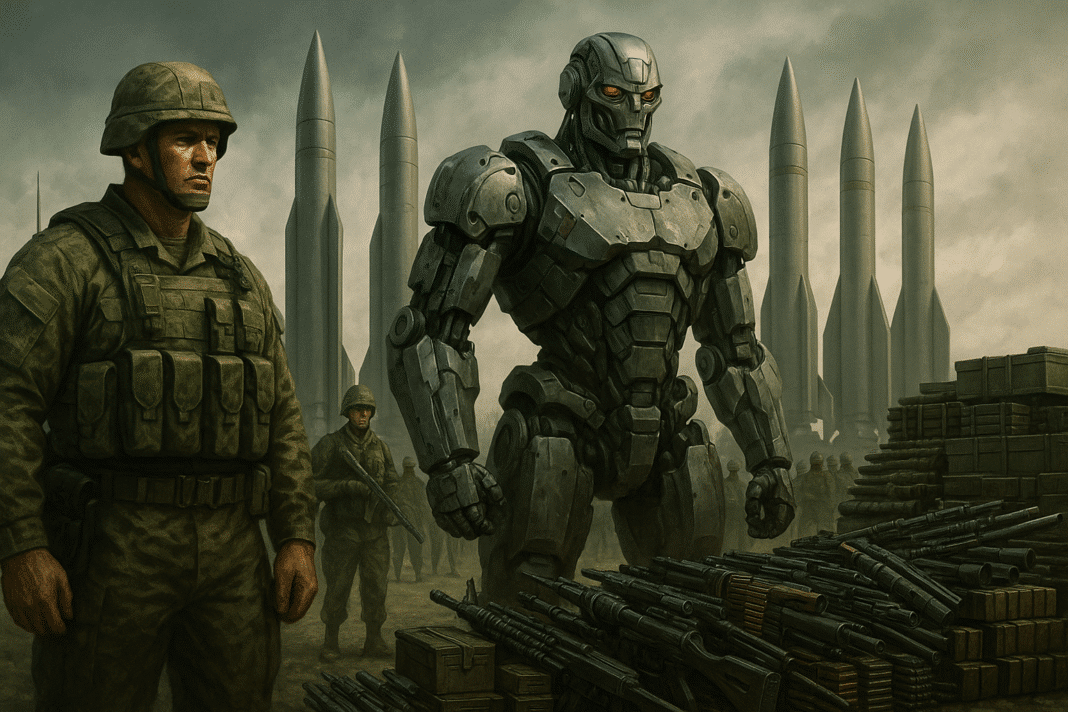
The transformation of modern warfare was one of the key topics of the seminar. Singh also pointed at the country’s traditional focus on military might – hulking armies, weapon stockpiles being replaced by far more subtle factors like cyber warfare, space capabilities and intelligence-led battles.
Integrating AI in Defence and Smart War Technologies
The Indian armed forces have also been actively incorporating AI into defence with an eye on improving decision-making, surveillance and operational effectiveness. India is pouring resources into drones, satellite-based surveillance and smart battlefield technology that is radically transforming its fighting forces in a move that could alter the way nations go to war. These are intended to help dissuade adversaries, independent what they do, and at the same time preserve our technological edge.
Space Command in Warfare: India’s Growing Readiness
Space: Battlefront Once a sci-fi fantasy, space combat increasingly is taken very seriously indeed. India’s space command centres and development of anti-satellite technology indicated a wider defence architecture. Satellite surveillance is being pressed into real-time data gathering, providing new levels of intelligence and the possibility of swifter responses on the ground.
Redefining India Military Training for Modern Threats
India’s defence strategy is not just about getting new weapons or constructing infrastructure. It also means crosscutting changes in military training and joint operational planning. The emphasis on synergy among the Army, Navy and Air Force through series of Ran-Samwad 2025 stands testament to the IPPS moving away from the tri-service command and execution formations.
India Adapts Training for Hybrid and New Age Warfare
Adapting military training to the needs of cyber warfare and hybrid threats is one of the focus areas. Today’s training includes virtual simulations, cyber threat analysis, and data-driven decision-making. Military exercises and joint wargames across services that harden Indian soldiers not only for battle, but also the future.
Modernisation via Indigenous Innovation and Global Collaboration
India’s modernisation journey draws strength from three vectors — indigenous innovation, global collaboration and strategic flexibility. Moves like the fact that the government is backing ‘Make in India’ in defence where cutting-edge weapon technologies, drones or surveillance mechanisms are being developed domestically. It provides self-sufficiency; minimizes reliance on foreign sources; and develops economic muscle.
Global Defence Collaborations and Technological Synergy
India also wants to adopt best-practices in the field of defence and access modern combat systems through global defence partners. Defence collaborations with countries such as the US, Israel and France have resulted in joint military exercises and transfer of technology, adds to India’s competitive advantage.
Defence Investment: R&D, Innovation Labs, and Strategic Exports
Economic measures are also underpinning strategic preparedness. R&D, Defence procurement And Innovation Labs Modern warfare is extremely capital-intensive, needing massive investments into research and development, defence procurement, and innovation labs. As part of constraint policy Indian government has increased its budget to modernize its defense and also implement export friendly defense policies to make India as an international armory supplier.
Inter-Service Coordination and the Evolving Nature of India War Response
The Army War College’s conference offered several important takeaways. Fittingly, pulling all three services together echoes India’s cognizance that modern war cannot be prosecuted by isolated services—they require synchronized, cross-domain capabilities. Second, Home Minister Rajnath Singh’s remark that “war today comprises cyberattacks, hacking satellite systems, economic embargoes, and imposing restrictions — this has spread even to the battlefield” expands the meaning of modern-day warfare in India’s strategic lexicon.
Strength Through Intelligence and Technological Agility
Finally, the seminar reiterated that India can’t afford to defend; it must anticipate. For that, we will need a strategy that melds military might and technological nimbleness, thinking faster than our potential adversaries. Effective intelligence, data-informed command and national coordination between the armed services and diplomatic departments are just as critical.
Also Read, INS Udaygiri and Himgiri Commissioned: India Boosts Naval Strength with Twin Stealth Frigates
Navigating Geopolitical Realities With Future-Focused Strategies
India lives in a delicate geopolitical neighborhood. Border skirmishes with China, decades-old hostilities with Pakistan and increasing cyberspace assaults by multiple international actors all make the case for an agile and transformative defence posture. Rajnath Singh’s military statement takes the country beyond classic deterrence into an era of proactive, technology led defence strategy.
Modern Warfare India Priorities: Hypersonics, AI, and Space Preparedness
With potential future fights being fought in the cyber and pace domain and not just land fights, the Indian armed forces are being told to modernise and be ever watchful. 5.Augmented or Artificial Intelligence based Network Centric Warfare, in addition to AI enabled surveillance world wide and real time response mechanisms and strategies including hypersonic missiles and laser weapons would be priority.
Strategic Partnerships and Tech-Driven Cognitive Preparedness
India’s continued focus on strategic partnerships, defence exports, and indigenous innovation prepares it on a course to emerge as a force multiplier in contemporary warfare. Training academies are being revamped, and a premium is being placed on cognitive readiness for both its commanders and its rank-and-file troops. Domestic startups and academia are being roped in to work on scalable defence solutions.
Conclusion: A Future-Ready India Rising to Global Challenges
India stands at a crossroads where peace and prudence have to walk hand-in-hand with strength and swiftness. Rajnath Singh’s remark that India believes in dialogue over disputes does not detract from its preparedness to protect its national interests at all costs. Travelling all the way from strengthening of fighter jets to launching advanced satellites to military surveillance or from dispatching soldiers to a joint combat exercise, India is fully prepared for its defence now.
Modern warfare India is confronted with doesn’t even permit the use of old strategies. It demands an adaptive, agile and technology guided response. With conferences like the recent Ran-Samwad 2025 and clear enunciaation of the way forward, India is no longer standing on just being a regional power but also a responsible global military power ready to take on the 21st century challenges.
Frequently Asked Questions (FAQs)
What is India’s current defence preparedness strategy focused on?
India’s defence preparedness emphasizes a mix of peace-first doctrine with state-of-the-art capabilities in cyber warfare, AI-driven surveillance, unmanned aerial vehicles, and satellite-based intelligence systems. The aim is to maintain sovereignty through strength while steering clear of unnecessary confrontation.
What role does AI play in India’s defence modernization?
AI in defence is central to India's modern warfare strategy. It enhances decision-making, real-time battlefield analysis, threat detection, and simulation-based training. The integration of AI is geared to boost operational efficiency and prepare for technology-intensive future conflicts.
What are the key takeaways from the defence seminar 2025 - Ran-Samwad?
The Ran-Samwad 2025 seminar highlighted inter-service cooperation, advanced warfare readiness, and India's resolve to not just defend but anticipate threats. Key topics included cyber warfare, hybrid threats, satellite surveillance, and the need for smart, tech-enabled defence infrastructure across services.
How is India enhancing its defence through global collaboration?
India is actively collaborating with global powers such as the US, Israel, and France for joint military exercises, defence R&D, and advanced weapon technology transfers. Coupled with ‘Make in India’ initiatives, these partnerships reinforce India’s global strategic position and innovation capacity.
Reference
India’s Defence Preparedness: Rajnath Singh’s Strong Message at Ran-Samwad 2025