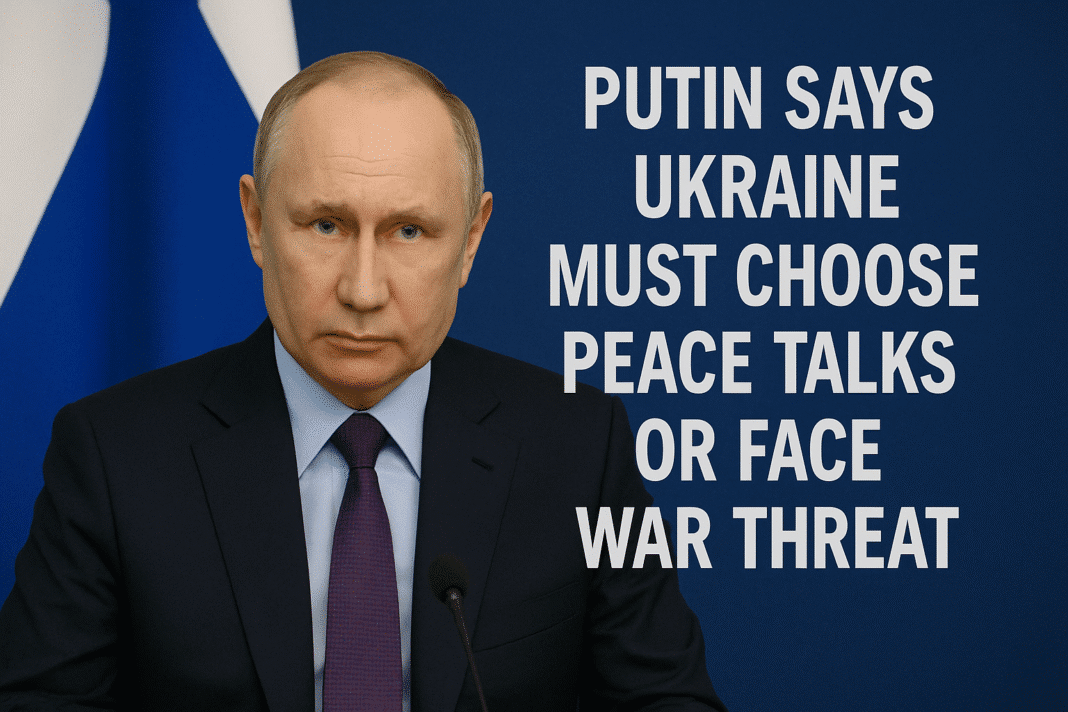

The Putin Ukraine peace talks have reached a critical juncture as Russia intensifies its diplomatic ultimatum. With rising global stakes in the Russia Ukraine conflict, and ongoing tension over the Ukraine NATO dispute, solutions remain elusive. This article explores international responses, US mediation efforts, and possible outcomes in this complex geopolitical standoff.
Putin Urges Ukraine Peace Talks : Choose Peace or Prepare for War
The fragile prospect for peace in Eastern Europe was being stretched ever thinner. With the world watching, President Vladimir V. Putin of Russia has issued a sharp ultimatum to Ukraine: Solve the catastrophic war through serious negotiations by a diplomatic deadline, or risk a more forceful Russian offensive. However, as the third year of the war wears on, and global security teeters on the edge, innocent civilians continue to be caught in the crossfire.
Putin Leverages Beijing Visit to Suggest Peace in the Russia Ukraine Conflict
In a public statement in Beijing on a state visit that drew a new gas contract with China, Putin offered his ideas about how to settle the conflict in Ukraine. He stressed that the only possible peaceful outcome for the Russia-Ukraine conflict is still possible — a so-called “return to common sense.” The tone of his message was that he still prefers diplomacy but is prepared to escalate the war effort if Ukraine and its Western allies do not accept Russia’s longstanding demands.
Key Framework of Diplomatic Putin Ukraine Peace Talks
Here in that frame – for the Putin Ukraine peace talks – are the three principle parts of the main story line:
- A Russian reversion to readiness to renew talks
- Russia’s unyielding no to talk on the question of territory and strategy and
- An increasing international involvement in the form of a higher level of activity, particularly from Washington, to draw off the seething heat.
Ukraine Negotiation Option Still Open According to Putin
Putin offered a crack for peace with his comments. If reason prevails, it will be possible to find a political solution to stop the war, he added. He referred to the new peace step – and not only in theory. Some of the optimism this time around stems from the view that the posture in Washington toward the war has shifted.
Trump Ukraine Peace Deal: A Recentered U.S. Strategy
Yes, Donald Trump has continued to express an interest in achieving peace between Russia and Ukraine. In his foreign policy briefings during the campaign, he outlined his plans to bring Vladimir Putin and Volodymyr Zelenskiy to the table. While some logistical and diplomatic obstacles remain, Trump has even cautioned Moscow about the potential for secondary sanctions if it continues to resist efforts for peace. But there have been no additional sanctions posted.
Trump’s Strategic Shift on International Peace Process
And these actions are part of a larger Trump gambit to recenter the U.S. at the heart of agreements that end global conflicts. This is a strategic pivot to which, in an era when American voters, especially of Trump, start to doubt military aid packages and question the cost of foreign embroilments, all sides are likely to take heed.
Russia War Ultimatum: A Hardened Stand on Ukraine
The olive branch convinces Putin to alter his terms only slightly. Russia is demanding Ukraine surrender its ambitions to join NATO, call a halt to what Moscow considers systemic discrimination against Russian speakers in Ukraine, and agree to the recognition of Crimea as a part of the Russian Federation. This tough stance is a narrow space for negotiation.
Ukraine NATO Dispute at the Core of the Conflict
Russian national security is undermined by NATO’s first expansion. With Ukraine, which shares a border with Russia, joining the alliance, Moscow is afraid that it will have to accept Western military infrastructure within what it considers its near abroad. For years, Russian officials have said that the eastward expansion of NATO is a violation of verbal understandings about this matter that were reached after the Cold War. So Ukraine desire to join NATO bloc is the root cause of the Russia Ukraine conflict. According to Moscow this process can`t be stopped.
Putin Zelenskiy Meeting: A Conditional Offer
At the same time, Putin reiterated he was ready to sit down with his Ukrainian counterpart, Volodymyr Zelenskiy. But he added one caveat: any such summit gathering had to take place in Moscow and be done in a way that ensures it’s well-prepared so the two leaders can arrive bearing results. For Ukraine, proposing the Russian capital as a venue was a nonstarter. Officials in Kyiv quickly dismissed the idea, describing it as “unacceptable.”
Volodymyr Zelenskiy Response: Ukraine’s Firm Stance
Zelenskiy has called for top-level meetings and has pressed for face-to-face talks with Putin, either bilaterally or via international mediators. But serious barriers remain. And with the Titanic hangar, the Ukrainian government has shown, not near so subtly, to Russia that it is not about to give an inch on territorial integrity or NATO. Instead, Kyiv is pressing for further sanctions on Moscow and urging the U.S. and European Union to take a tougher stance against the Kremlin.
Demand for Russian Withdrawal from Ukrainian Territories
Zelenskiy’s team says any solution must begin with the complete removal of Russian forces from internationally recognized clear territories of Ukraine, including the ones Russia claims it annexed. Some of these include Donetsk, Luhansk, Kherson and Zaporizhzhia – all very much still also in play.
Russia Military Threat Creates a New War Calculus
Though Putin likes to say he favors diplomacy, the warning was unambiguous: If negotiations collapsed, Russia would escalate with force. Russia has already moved hundreds of thousands of troops and raised its defense budget sharply, so the threat is more than rhetorical. This military Russia threat is being taken seriously by Ukraine and her allies.
Russia Sustains Military Preparation Despite Sanctions
Sanctions, such as constraints on its financial systems and major exports, have helped cripple Russia’s economy, but it has not curbed Moscow’s ability to finance military operations or develop weaponry. Moscow is also continuing to receive support directly or indirectly from a number of countries that have so far declined to join the Western sanctions, including China, with which Putin has just reached a deal for a new gas pipeline.
Geopolitical Impact and Strategic Futures
The global legacy of this war continues to resound in geopolitics, energy markets and security strategy. The West today is staring more and more into a rinse-wash-repeat of a protracted proxy war or siding with a messy diplomatic fix. There’s a very public debate inside NATO (and among European countries more generally) about the long-term way out of this, especially as some member states have grown ever more dubious about endless military commitments.
New China-Russia Gas Deal and its Conflict Ramifications
The new Russian –Chinese gas agreement helps provide a frame within which to judge these events. It might also, theoretically, reduce Russia’s dependence on European energy markets, increasing its geopolitical leverage and the length of time it could sustain conflict before offering economic palaver.
Final Diplomatic Moves May Define Europe’s Future
The ever more exasperated Kremlin knows that there is not much the vast majority of Western nations are going to do about it unless its basic demands are met, and it will happily fight the war to a finish, if that’s what it takes to impose them on Kiev. Now, the next diplomatic step may decide Ukraine’s, and to a degree, Europe’s, destiny.
Frequently Asked Questions
What are the main demands of Russia in the Putin Ukraine peace talks?
Russia demands that Ukraine abandon its NATO aspirations, recognize Crimea as part of the Russian Federation, and halt what it calls discrimination against Russian speakers. These terms narrow the room for productive negotiation in the ongoing Russia Ukraine conflict.
Is Trump currently involved in mediating peace between Russia and Ukraine?
Yes, Donald Trump has shown interest in brokering a peace deal. Though no official peace accord has been reached, behind-the-scenes US mediation efforts and Trump’s prior commitments suggest continued American involvement in reviving the Putin Ukraine peace talks.
Why is Ukraine’s NATO membership such a contentious issue?
Ukraine NATO dispute lies at the heart of the conflict. Russia perceives NATO’s eastward expansion as a threat to its security, especially with Ukraine so close to its borders. This has made Ukraine’s NATO ambitions a red line for Moscow.
What impact does the new gas pipeline agreement between Russia and China have?
The gas pipeline agreement China signed with Russia could help Moscow offset Western sanctions and prolong its military campaign. This move boosts Russia’s economic resilience and geopolitical leverage during the Putin Ukraine peace talks and beyond.
Reference
Putin Says Ukraine Must Choose Peace Talks or Face War Threat
Stay updated with all the latest news and insights – Global Trends Insights
Follow Us On Instagram