
A Florida jury’s decision in the Tesla $243 million verdict has jolted the EV industry, igniting controversy over Tesla Autopilot lawsuits and raising urgent questions about self-driving car safety. The Florida jury verdict signals a critical legal and regulatory turning point for EV safety litigation and the future of autonomous vehicles.
A deadly crash back in 2019 has become a significant legal case as an electric car maker, Tesla was found liable by a Florida jury to pay $243 million in damages. Not only have the lives of the parties involved been affected by the ruling, but it could affect how self-driving systems are developed and regulated going forward, bringing up some serious questions about whether current ADAS tech is safe.
Background of the Tesla Autopilot Lawsuit
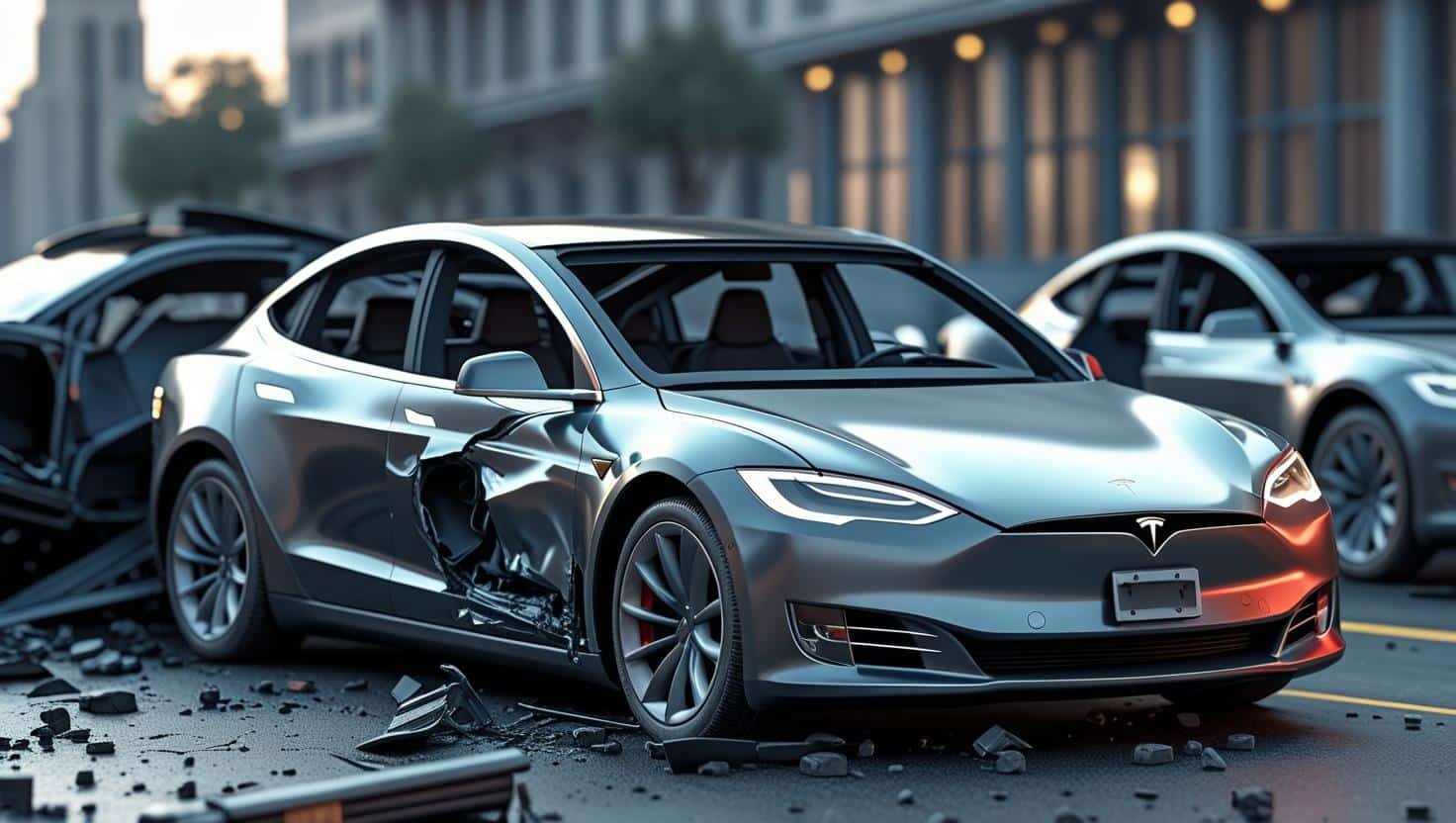
The $243 million Tesla verdict is the result of a fatal car crash that took place in Florida during March 2019. The case centered on a driver who was using the Autopilot feature of a Tesla Model S. A passenger vehicle did not brake in time before reaching a T-intersection. As a result of this failure, Aponte crashed head-on into another vehicle at high speed, killing two passengers in the other car.
Prosecutors said the Tesla driver was using Autopilot to steer through a intersection and that this directly led to losing control right before the crash. While the driver was said to bear most of the responsibility, it was believed that a defect in the software that failed to take corrective action would be at least partially at fault for what transpired.
At its core, the Tesla Autopilot lawsuit attempted to answer where exactly liability was divided between human operator and automated system. The trial spurred additional questions about how Autopilot was being advertised and what its system limits actually are. The answers to these questions were especially important when the jury’s decision arrived at their final conclusion.
Florida Jury Verdict: Who’s to Blame?
The Florida jury verdict blamed both Tesla and the dead driver of |responsibility for the fatal accident. The jury has settled with the victims’ family in a $ 243 million verdict which in effect puts Tesla on the line for its potential part of the “mis-operation”/fault within its self-driving capabilities. The driver was also found to be at fault, but Tesla’s Autopilot system played a large enough role that the fine levied was substantial.
Tesla notably took exception with the ruling. The firm called the judgement faulty and said that it could have moratorium on safety innovation in the electric vehicle sector. Tesla had reportedly said it plans to appeal the ruling, a move that could take this debate all the way up to an even higher court dealing with where responsibility lies when semi-autonomous driving systems come into play.
Implications for EV Safety Litigation and Consumer Protection
The Autopilot liability ruling is much more than an individual company losing a lawsuit it shines a light on larger issues facing the electric vehicle (EV) sector. When automakers offer new cars with the latest advanced driver assistance systems (ADAS), consumers who pay extra for these features expect them to work. Investors, manufacturers and customers are again left to wonder: Just how self-driving are these systems? And who is ultimately responsible in the event of a failure?
For ages, Tesla has been one of the pioneers in EVs along with autonomous tech. But the ruling could put the brakes on some of the Full Self-Driving (FSD) hype. As a result, regulators could now face more pressure to ask for more certain safety evidence when considering broader permissions. Worse, other automakers might delay or redesign their own autonomous systems simply because of the very real threat of potentially being held liable for unclear liabilities.
It also kicks off larger conversations about state supervision and tech transparency in the U.S. The NHTSA has opened at least two investigations into Tesla crashes involving Autopilot. That decision may give an extra push to future federal standards on the safety of autonomous systems.
Marketing Misrepresentations in Tesla’s Driver Assistance Features
One key element of the EV safety litigation is Tesla’s advertising of its technology. The company called its semi-autonomous driver assist features “Autopilot” and “Full Self-Driving.” Though these terms are fluid in a strictly technical sense, they have earned Tesla accusations of exaggerating self-driving capabilities and misleading customers as to what the vehicle can safely do on its own.
As previously reported, Tesla is also involved in a separate lawsuit with the state Department of Motor Vehicles over Autopilot testing. The case alleges that the company committed false advertising and over-represented its driver-assist software. Now, California’s DMV is looking to crack down with penalties that could include a pause on the company’s ability to sell cars across the state.
These legal and regulatory changes could force Tesla, as well as other companies in the auto industry, to change the way they market driver-assistance systems. Definitions for terms like “autonomous” or “self-driving” may eventually have to be standardized to avoid any confusion or unintended misinformation.
Legal Landscape of Tesla Autopilot Lawsuit Going Forward
Tesla said it would appeal the Florida ruling, with its legal team arguing the driver deviated from clear instructions to keep his hands on the wheel. Driver misuse and inattention, not Autopilot itself, are at fault, they say. But the jury agreed that Tesla was sufficiently to blame in the design and marketing of the system to deserve damages.
As a consequence this case might be the one that shapes the future layout of courtrooms. Verdict 2025: Tesla crashes will forever be the benchmark for safety litigation over assisted driving systems The result will be a greater care from the companies, better consumer education, system safeguards and clearly noted operational boundaries in the software itself.
But Tesla has an even more uphill battle in demonstrating the real-world reliability of its systems. Another single crash or routine software failure could push regulators, investors, or even lawmakers toward additional scrutiny and the potential for legislation.
Public Skepticism and Accountability in Self-Driving Tech
The trust in self-driving or semi-autonomous driving technologies may be eroded among the general public as well. Most consumers welcome the convenience and innovativeness promised by these features, but trust erodes quickly when lives are lost or liability murky.
The Florida jury verdict shows how existing guidance remains inadequate and this is where tech has outstripped the legislation. Nice riddance (although how much control consumers should exercise while handing over the reins to things like Autopilot is still an open question for many). This is reminiscent of a critical shortcoming the public rollout of safety features without wide-scale consumer education or easily accessible safety records.
This could lead to new crash test performance tests for NHTSA, or even force automakers to require a certain amount of training, real-time performance data, or stronger warning messages that more assertively communicate the limitations of assisted driving systems. Irrespective of the tech advancements, accountability is bound to play a final say in how much acceptance the technology receives.
Future Outlook After Florida Jury Verdict
Tesla is hoping for an appeal while industry observers watch these developments closely. That could expose the Tigard store and whatever other former Zupan’s branches fall into Escoe’s hands through a bankruptcy auction underway now to traceability in the Columbia Hills case if the judgment is upheld on appeal. More demanding voices on federal oversight of driver assistance advertising and safety testing. 3rd-party ADAS evaluation required prior to commercialization. Better consumer protection regulations for the usage of automated vehicles. Better jurisprudential leverage for legal prosecution of technology providers in automotive collisions. That would go a long way to shaping the availability not only of EVs but also autonomous features in the U.S. market. A viable and successful appeal would solidify Tesla’s status as a pioneer, while the reverse case leads to more litigation and less faith from consumers.
The $243 million payout, said to be the largest of its kind in U.S. history by Mr Aguayo’s clients’ lawyers, amounts to legal acknowledgment. The legal and financial result to Tesla may change how the company, as well as the industry conducts business moving forward. To be sure, it revives the public policy discussion, and ask how much autonomous, open-road control and trust we have in machines.
The Tesla $243 million verdict is a precedent in the courtroom but it will also set a standard for judging, labeling or testing new self-driving tech going forward.
Frequently Asked Questions (FAQs)
What is the Tesla $243 million verdict about?
The verdict pertains to a 2019 fatal crash in Florida involving a Tesla Model S using Autopilot. A jury determined Tesla was partially liable, awarding $243 million in damages to the victims’ families, citing issues in Tesla’s ADAS system and its marketing practices.
Why is the Tesla Autopilot lawsuit important for the EV industry?
The Tesla Autopilot lawsuit sets legal precedence for how responsibility is allocated between human drivers and self-driving features. It could influence future EV safety litigation, regulation, and the development of autonomous vehicle technology across the automotive industry.
How might the Florida jury verdict affect Tesla going forward?
If upheld, the Florida jury verdict could invite more lawsuits and stricter regulatory scrutiny. It challenges Tesla’s marketing terms like “Full Self-Driving,” potentially impacting how the company develops, labels, and advertises future technologies.
Will Tesla appeal the Florida jury verdict?
Yes, Tesla has indicated plans to appeal the $243 million verdict, arguing that the driver misused the Autopilot system. The company maintains that the software is safe when used correctly according to instructions.
Reference
Tesla to Pay $243M After Jury Finds It Partly Liable for Fatal Autopilot Crash